
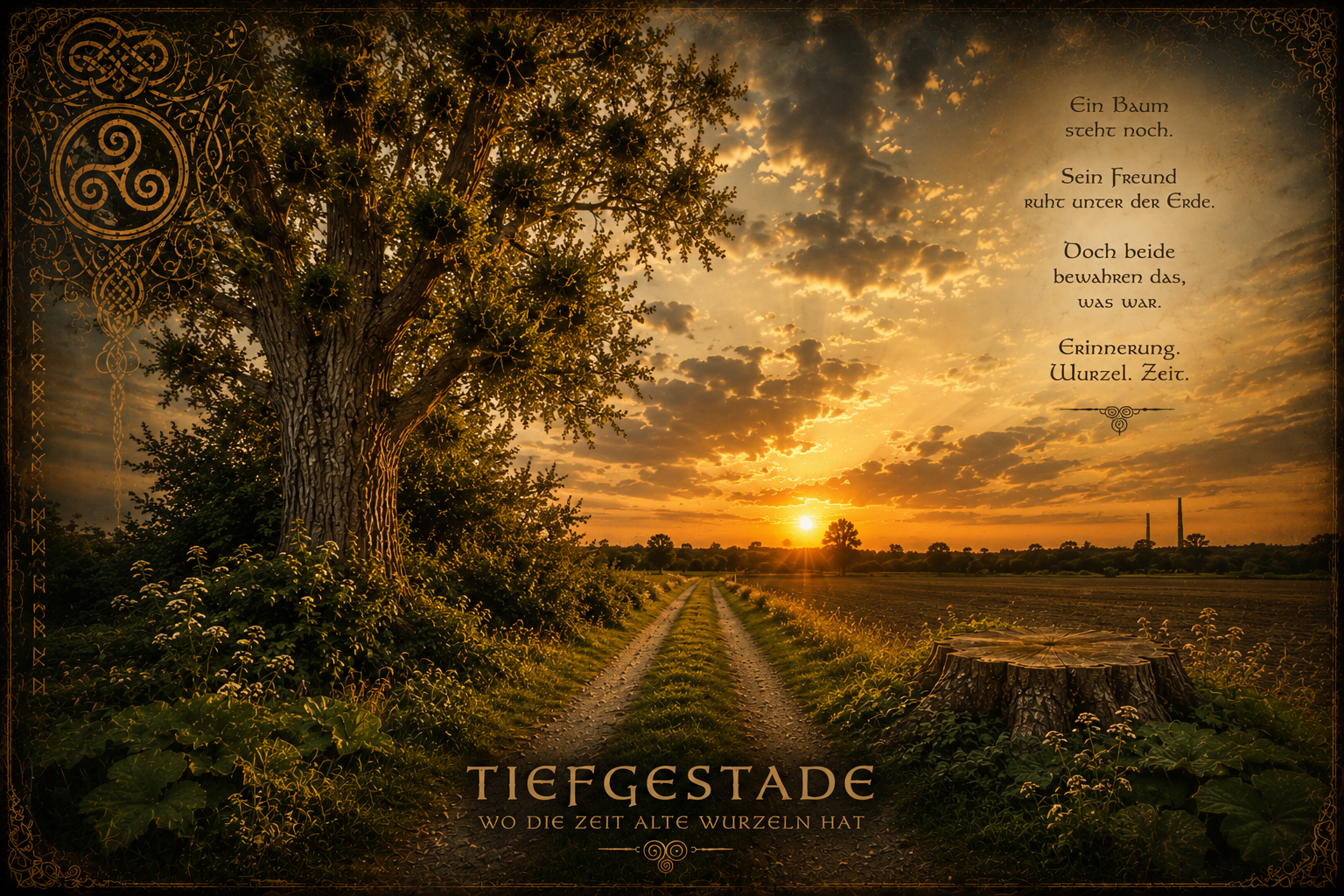
The Guardian at Tiefgestade
There are places you do not consciously call upon. They call upon you instead.
Tiefgestade is one of those places for me. Between fields, paths and the quiet lines of the landscape there lies something that feels older than the time we humans measure. No monument of stone. No sign. No official place of remembrance. And yet you feel it immediately.
Back in 2022, when I first visited the Celtic burial mound, this tree already caught my eye. At that time the mound had only just been raised again after archaeological excavations. A place that had lain hidden for centuries and only became visible again through aerial photographs. Right in the middle of farmland. Right in the middle of a landscape that is measured rationally today and yet still carries stories beneath its surface.
I remember letting my gaze wander then. And there he was.
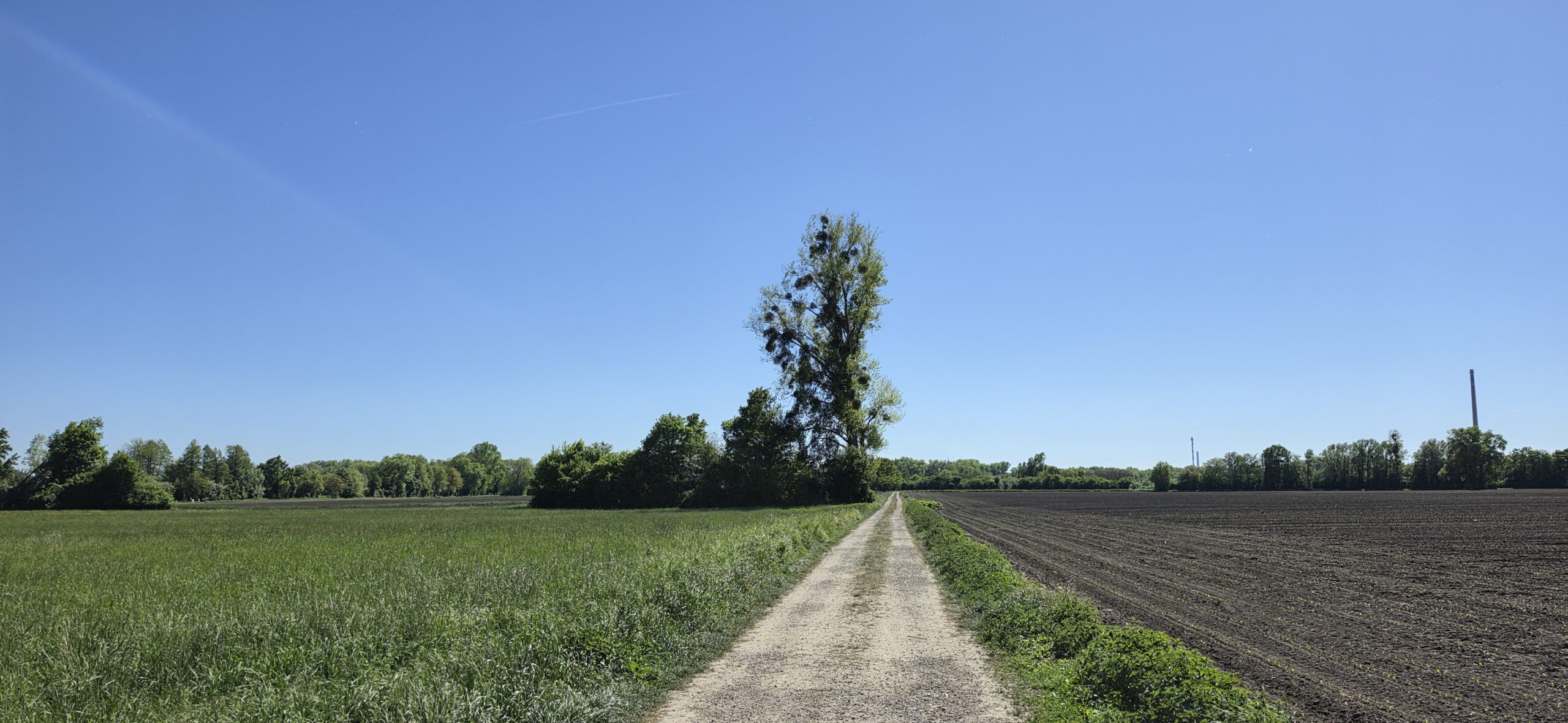
Massive. Silent. Unimpressed.
As though he were guarding not only the path, but something far older. Something that cannot be excavated.
Back then I noticed him. This year I found him.
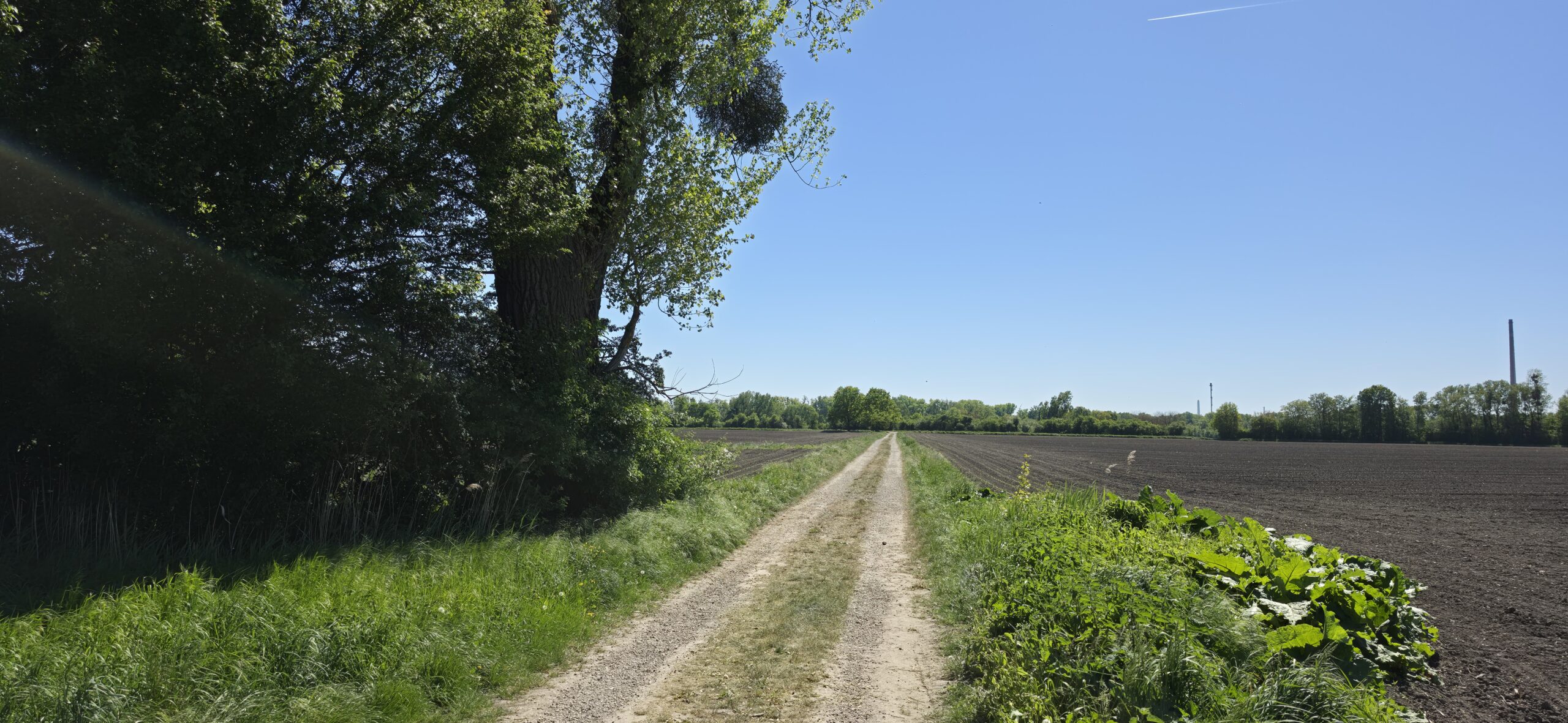
The fallen companion
Beside him lies the stump of his companion. An old giant. Fallen. Cut down. And yet not dead.
The fascinating thing is this: the tree stump continues to live.
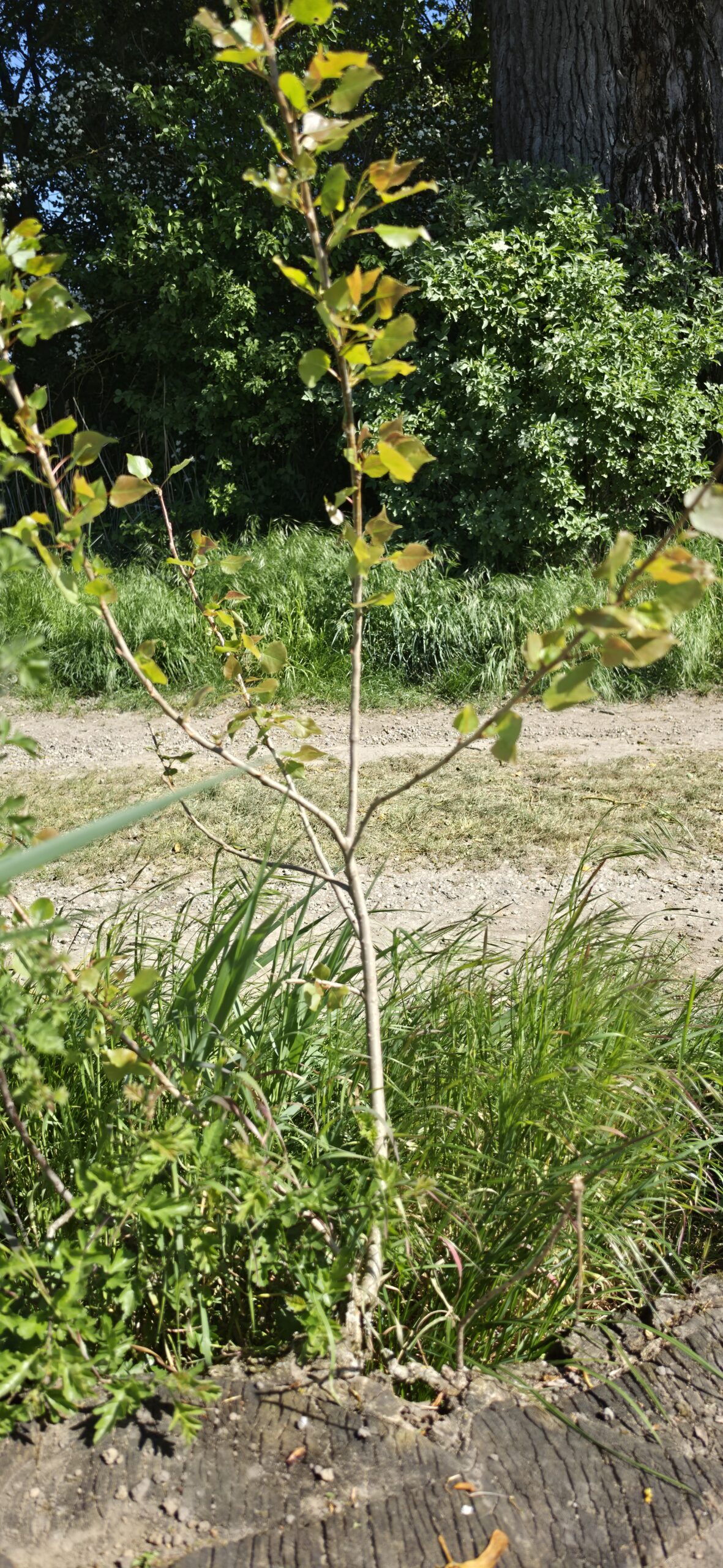
New shoots grow out of its interior. Between the tree rings new life emerges. Moss, lichen, young branches. Nature knows no final death. Only transformation.
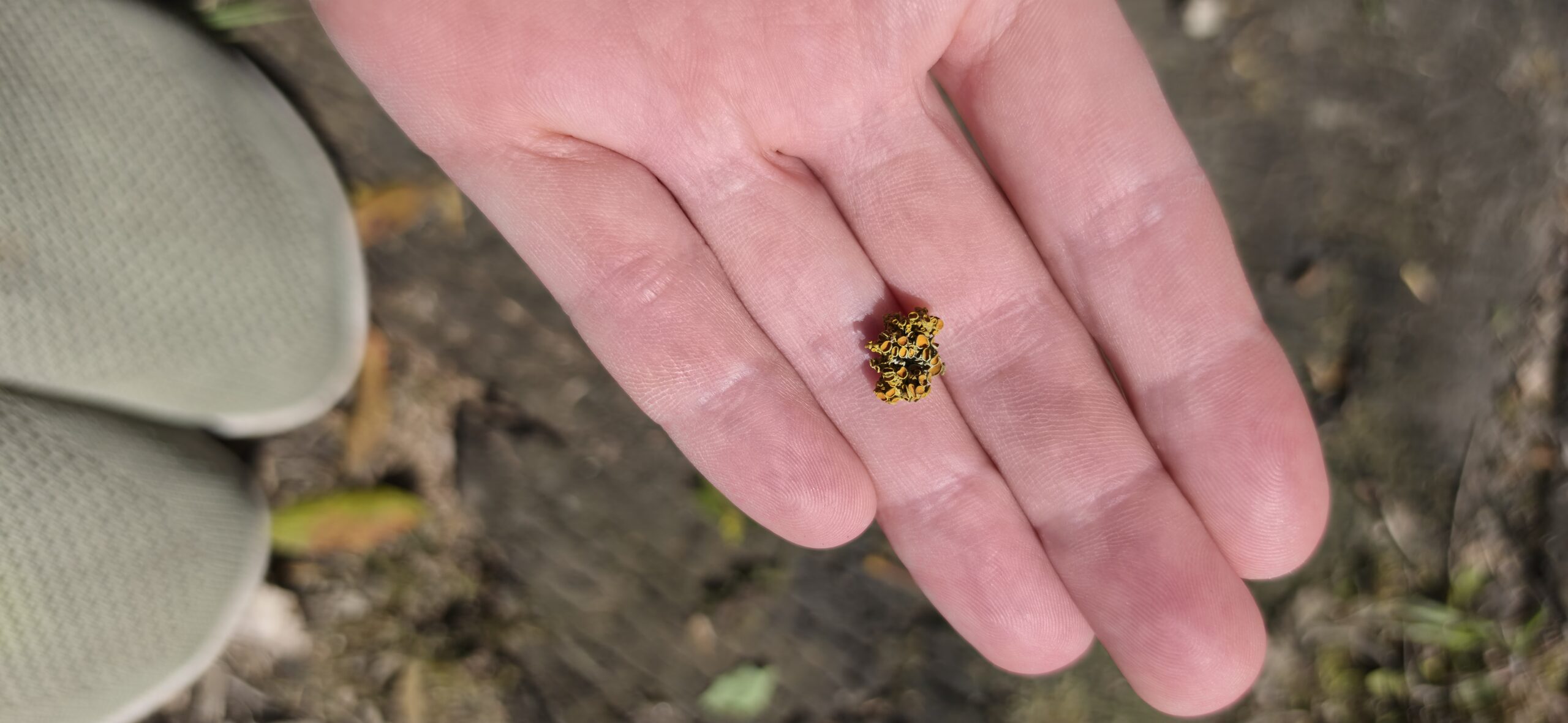
While many people would see only an ending in a tree stump, I saw something else there: a reminder that even after destruction, life returns.
Perhaps more slowly. Perhaps more quietly. But it returns.
The language of the landscape
When you stand there, something changes.
The wind sounds different. Time moves more slowly. And suddenly even modern things — the fields, the paths, the power lines in the distance — feel like a thin layer above something much deeper.
The ancient cultures still knew that places possess memory. Not metaphorically. But truly.
Some places hold something. Traces. Moods. Remembrances.
Perhaps that is exactly why people return to certain places again and again over thousands of years. Not because they are spectacular. But because they answer.
Between shadow and light
What moved me especially was the moment when my own shadow fell across the old trunk. For a brief instant it seemed as though past and present were touching one another.
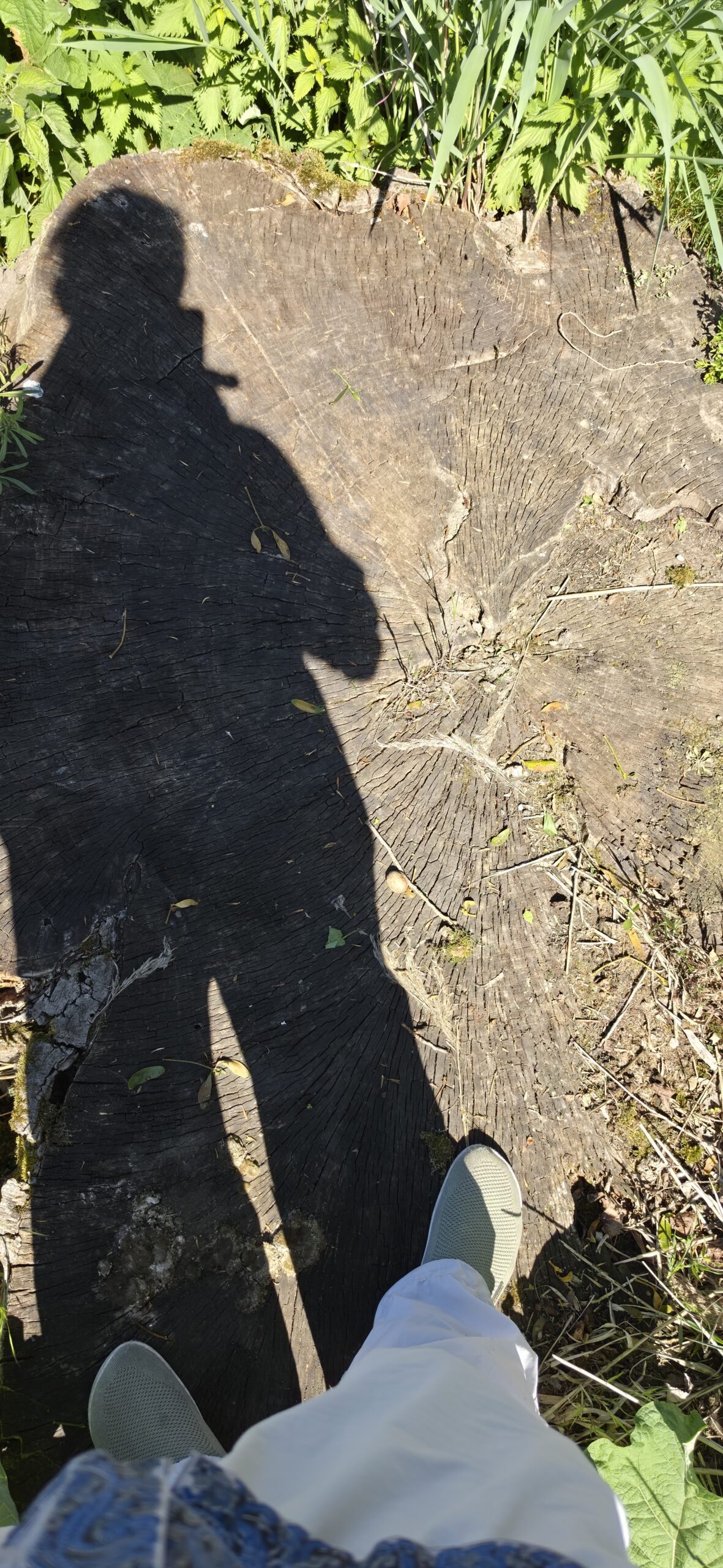
The living tree. The fallen companion. The human being in between.
Three states of the same journey.
Growth. Decay. Remembrance.
And perhaps that is the real language of nature: not perfection, but cycle.
The guardian still stands
The great tree itself appears almost like a guardian. Bound with ivy, marked by time and weather, yet full of strength. Its crown reaches far into the sky while its roots are probably touching things long forgotten.
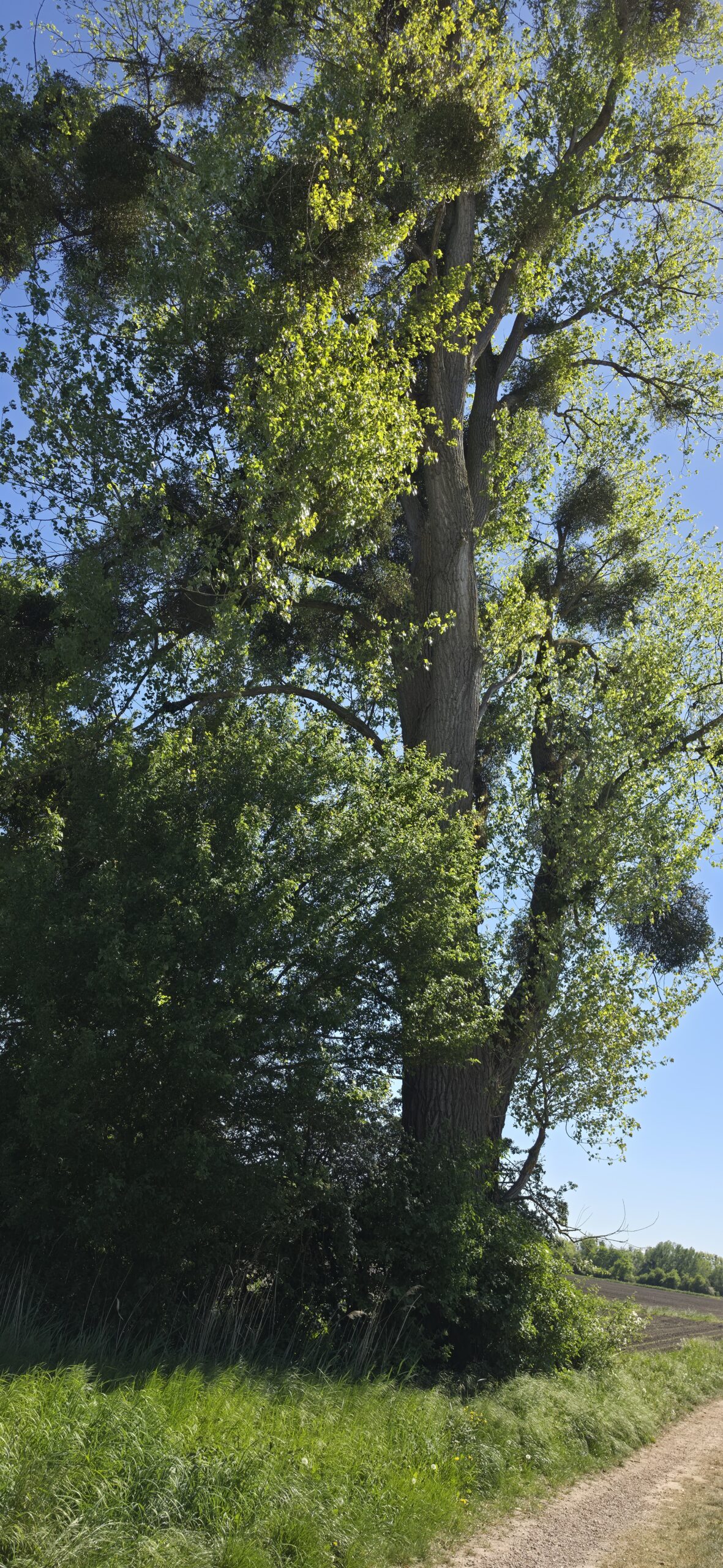
When you stand beneath it, you suddenly understand why trees were sacred in nearly all ancient cultures. They connect worlds. Sky and earth. Past and future. Life and death.
And sometimes they remind us that we ourselves are only passing through for a short time.
Perhaps that is why we humans keep seeking out such places. Not to find answers, but to remember that we are part of something larger.
The tree at Tiefgestade still stands. The other one still lives on. And somewhere between the two begins a story older than any word we could ever find for it.
— Merlin